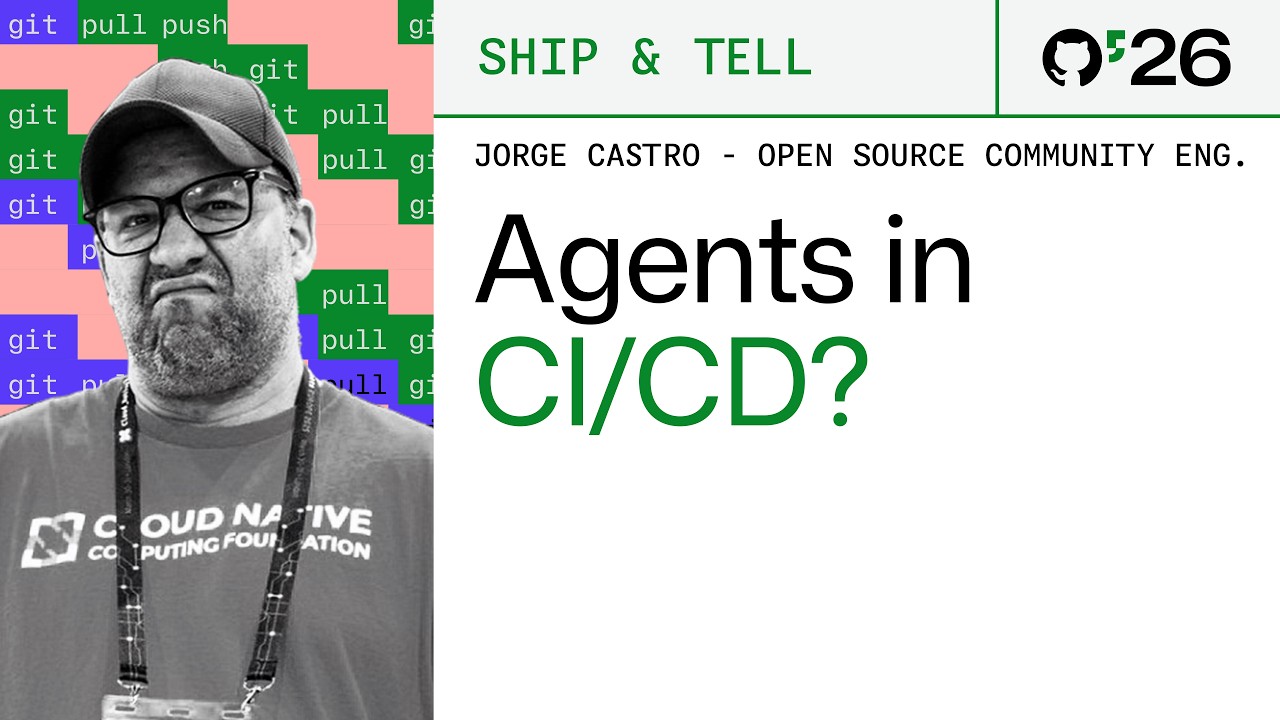
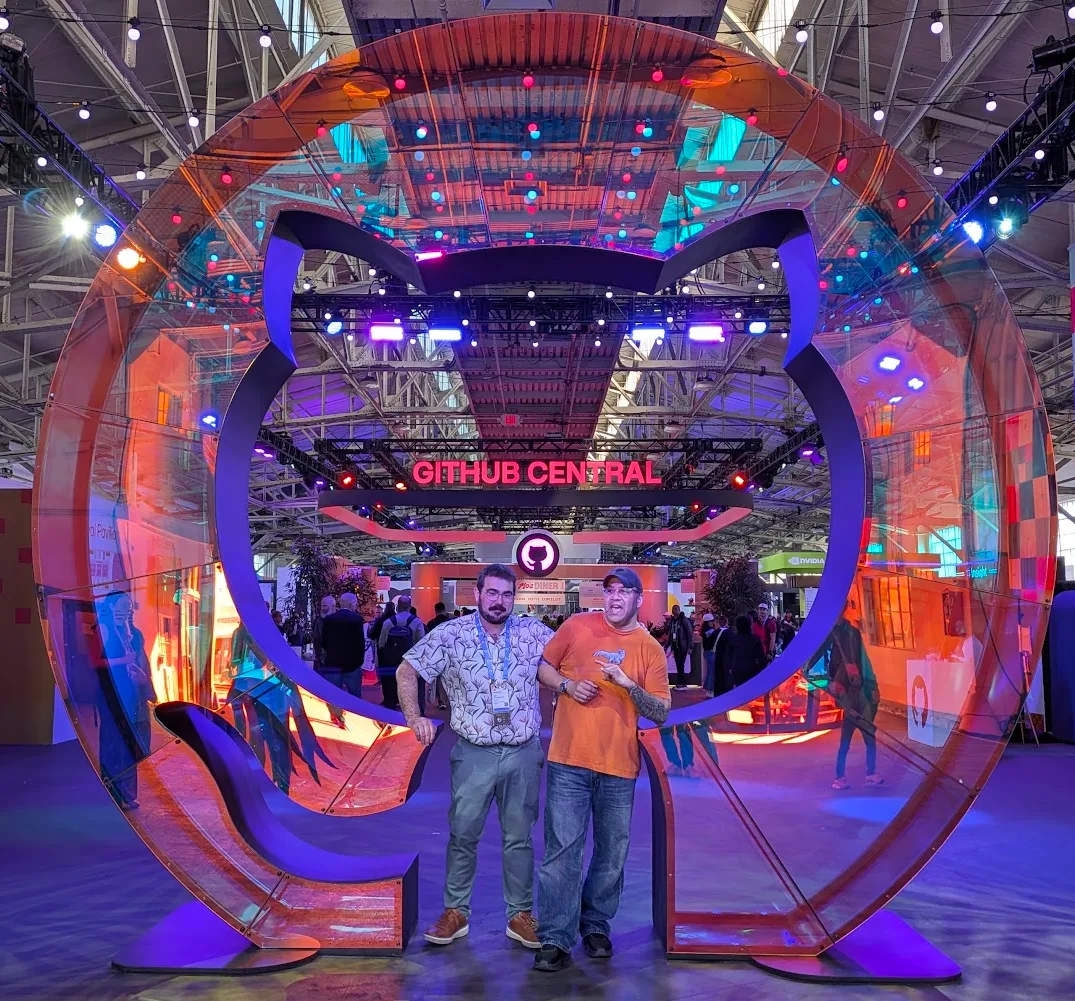
Bluefin was fortunate to get nominated for a "Ship and Tell" session at GitHub Universe.
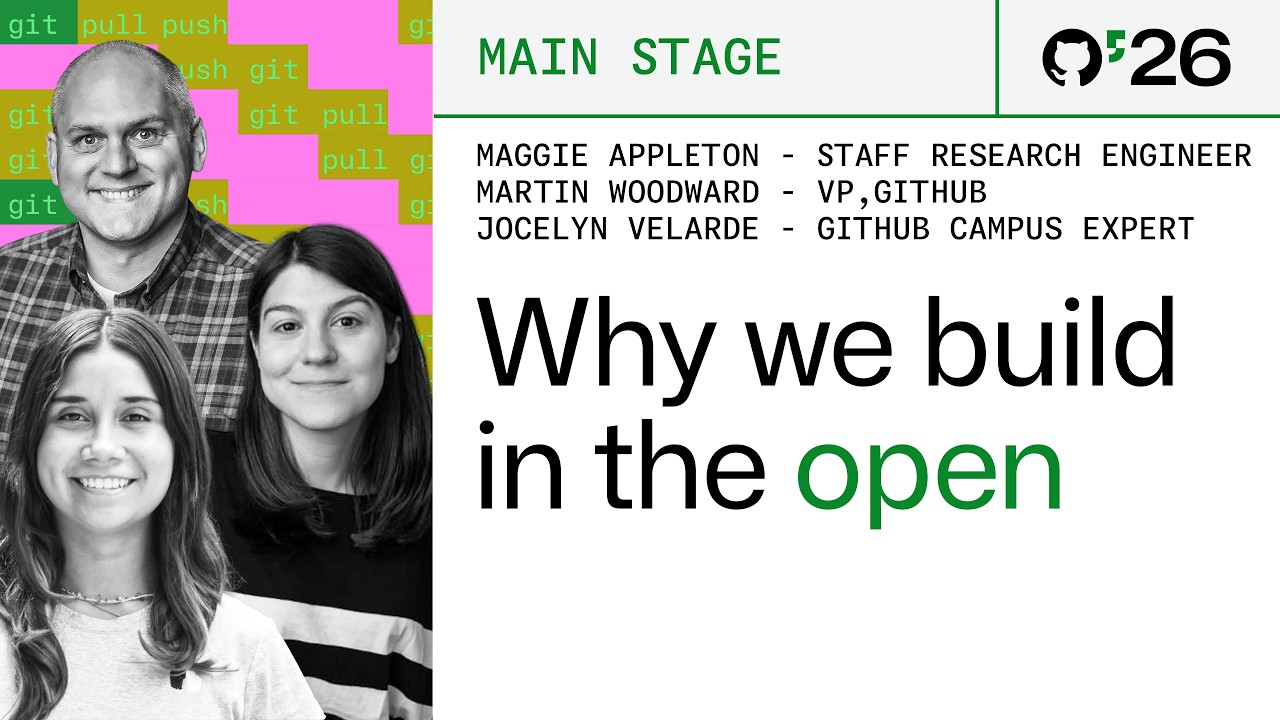
A little while ago we had a thread in our discussions about the nightmare that is printing on Linux. What started as a joke turned into an actual thing that we built. It was such a cool story that Martin Woodward mentioned us in his closing keynote at Universe!
I've gotten feedback in the Discord from multiple people who have these working. We could really use more data/feedback/reports from those of you who have printers that need these drivers.
It was also a great event to spend time with Kyle Gospodnetich (co-creator of Bazzite). This gave us an opportunity to catch up on a bunch of things. Bazzite's build system just got reworked into a Python for a super clean design. It was exciting to hear Kyle talk about the new people that are coming on board. Just a week prior I had spent time with Cameron Knauff, the maintainer of StillOS. Same enery, the cloud native experts are starting to show up in larger numbers and everyone is accelerating.
We had a great 30+ minute discussion with Godot developers. Kyle spent a good deal of time explaining the Flatpak process to them, you love to see it.
We had some great sushi too:
Overall we had a great show, and it was awesome. I was inspired by the Home Assistant and AutoGPT developers as well, we have lots of experts to learn from! This was a bucket list event for me, we had to get nominated before even being submitted, it's very hard to get a talk here so it was great to be able to present your work in front of these developers!
Jono Bacon posted this video about how we did things in Ubuntu during the good old days. I thought it would be relevant to post here. Marco Ceppi and Adam Israel are the Maintainers Emeritus who helped make the first prototypes of Bluefin. It's basically this formula but applied to bootc images:
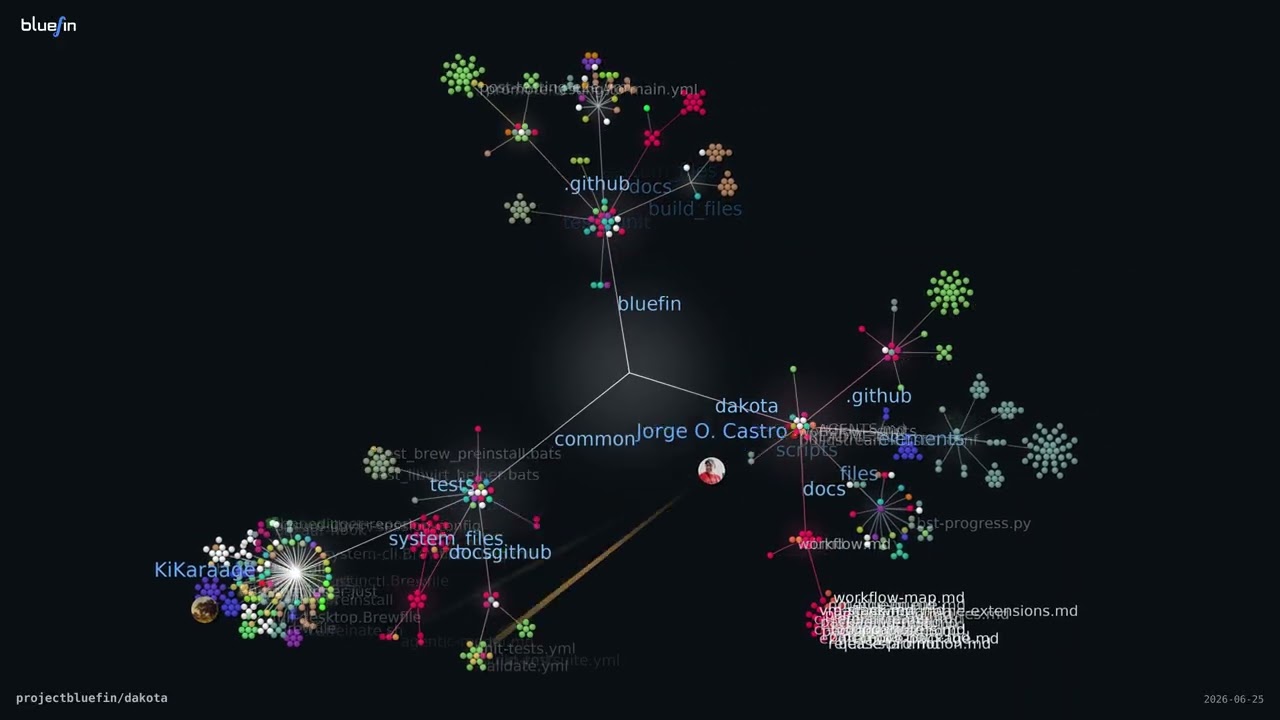
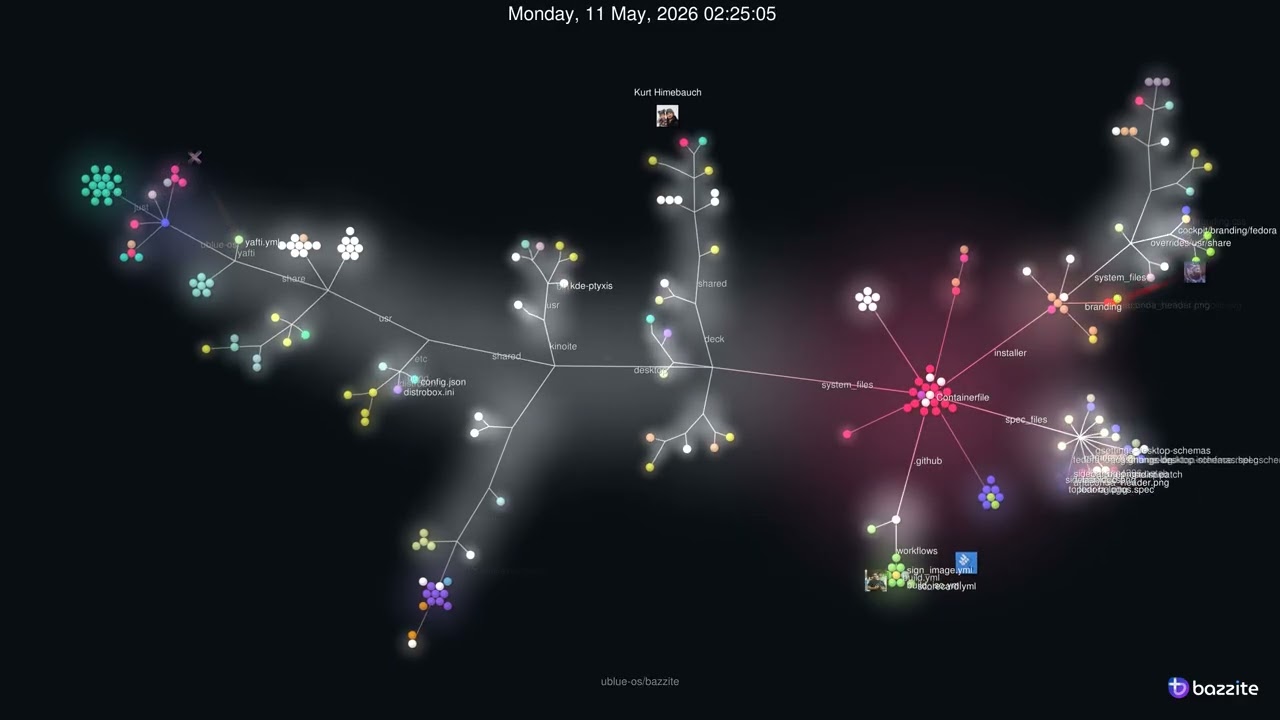
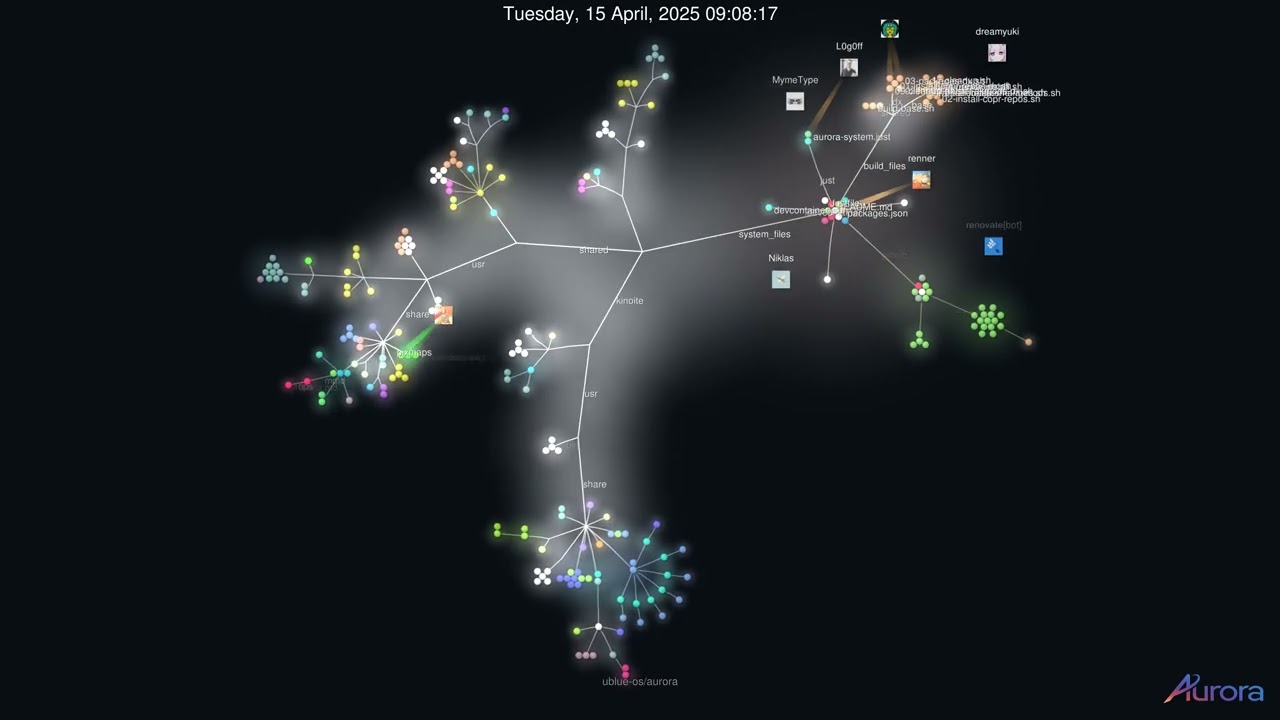
I wanted to capture the recent swarm of activity in the project lately, so I turned to a trusted tool: gource. This is a visualization tool that makes git activity look cool. We needed something that showed how Bluefin used to be, to how Bluefin is now. Here's the past few months:
Some high points:
02:59 — Starting up the Bluefin Factory with Hive - Prepping for the clankers to start their work. Here you find me frantically realizing that it's only a few months to GitHub Universe so you see me doing a bunch of fixes in the docs and YAML files in order to prepare for the automation
04:00 — Where Hive is introduced and mostly turned on
I'll likely refresh this in a few weeks since we're really grooving now and getting in lots of fixes. We'll see how it plays out over the next month or so! I think this graphical representation is quite cool. It's a good graphical representation that shows how we went from manual mode to agentic mode. It's also nice that everything is MORE SPREAD OUT across MORE people instead of just a few. The next few months will be the real test to see how we do! Check clankers.projectbluefin.io for contribution instructions if you want to check it out!
For me the reviewer role has changed significantly. We have testing branches and test suites now so we can do better reviews instead of "this is mostly fine if it breaks users will tell us.". There's still a lot of that of course, we can never know who is using every knob in an operating system. Mostly now I review things in my omp harness and watch things scroll by slowly. Sometimes I need to steer/adjust but these days it's more acking each other's reviews. This is particular handy with James being in India, we can leave each other homework to review since every change still needs a +2 from maintainers.
Is AI good or bad for open source? This is 58 minutes of me explaining what I've learned on this.
If you're here for the hot take: Are we really all on the same side? There are two worlds in Linux. What reddit/masto/youtube thinks "Linux" is. And then how Linux actually is.
Our value to our users is that we give you Linux as designed by the professionals. The flex is leveraging the collective knowledge of the community. New users have been led to believe that shipping three-year-old kernels and old software is the right way to consume Linux. Good luck with that. When it comes to my Linux, we listen to Lennart. We do listen to GNOME developers. Linux is about choice. We choose a well-designed system and thank the UNIX gods every day that we don't have to deal with that stuff.
We choose not to let people dictate to us how to use our computers. The science is out. The experts have spoken. I've been fortunate to have access to Greg K-H during his time, and we spent a long time discussing how this affects our communities. And he's right. The damn things are finding bugs. And I'm tired of Linux's bullshit. And I mean that in a loving manner. 90% of this crap is passing a 0 or 1 to some silly argument because Asus hates you.
We've got new territory to explore and we're moving quickly. My lesson from six months of AI is "Seven Days to the Wolves". Where will we be when they come? I've been doing this job a long time and it took me fifty-eight minutes of Puerto Rican mansplaining and a cloud-native symphonic metal musical to explain it. LOL.
I had the pleasure of sitting down with Michael Tunnell to discuss Aurora, Bazzite, Bluefin, cloud-native Linux desktops, and the future of the project.
Guardians, today Bluefin GTS switched its base from Fedora 41 to Fedora 42. The gathering of raptors has begun. In a two weeks Bluefin (aka bluefin:stable) releases on Fedora 43 and we will start the cycle all over again!
Looking for Fedora 43? That's here too in bluefin:latest, and will roll out to bluefin:stable users in 2 weeks. It's tough to write two of these, so we'll likely just move to spring/autumn announcements and whenever major things land. When bluefin:stable upgrades I will post it as an addenum in the discussion thread for this post.
As it ends up F43 will be coming to bluefin:stable while we're in Atlanta, GA, for KubeCon + CloudNativeCon, come say hello! As a bootc reference architecture we tend to align with the release cadence of other projects. This usually means that I'm on the road when there's a Bluefin release happening, so we do status reports like this depending on where we are in the world at the time, and to ensure transparency. It's also our chance to gather with attendees and get feedback on how we can make Bluefin better and gather feedback.
You'll receive this update during your next update window, or you can run an update manually by clicking on this icon:
If you've never experienced a Bluefin upgrade before, McPhail has a full writeup. Here's the major release information:
Bluefin is an operating system for your computer. It is designed to be installed on a device upgrade for the life of the hardware – we accomplish this by sharing the maintenance and care of our systems together as a community. It is designed to be as “zero touch” as possible by providing a curated GNOME experience.
Bluefin GTS (aka bluefin:gts) is our standard release, designed to be one cycle behind the most current Fedora release. This one's been in the oven for about six months and is ready to go. In a few weeks the bluefin:stable branch will move on to Fedora 43. If you're brand new you can use the website to pick the right image or select from the grid below:
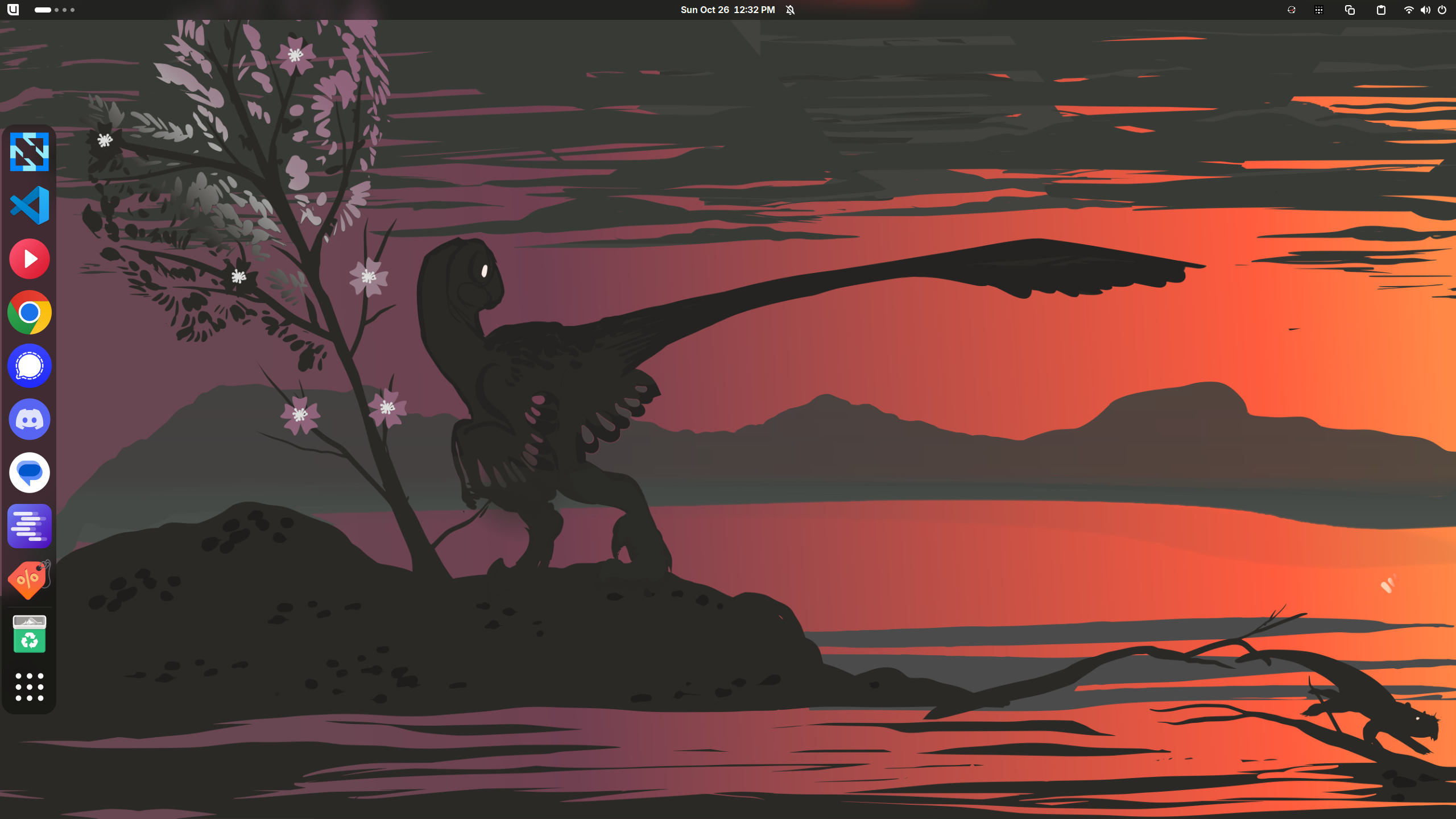
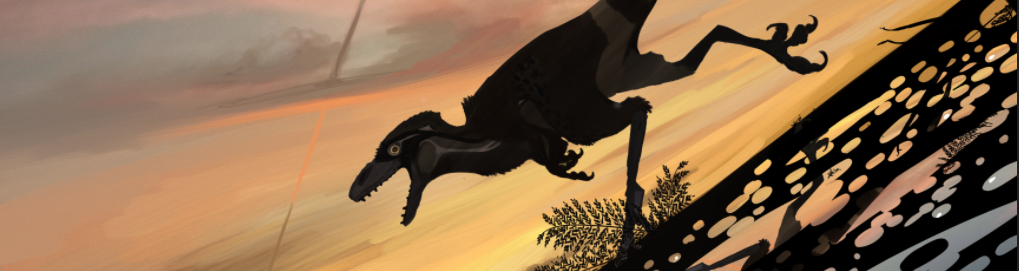
This unidentified Dromeasaur is by Dr. Natalia Jagielska, a world renowned expert paleontologist and paleoartist! We reached out to work with her on bringing her artwork and style to Bluefin, and she said yes! This rendition will be revealed in November, or you can just manually pick it in the wallpaper chooser.
I am so stoked about this, an actual scientist! We're retconning that this is just Bluefin enjoying a nice day at the lake. We have two more wallpapers from her coming soon. I have come to really appreciate the world of flying reptiles. They are terrifying.
Natalia's artwork was vectorized and remastered by Delphic Melody, please consider donating so that the collaboration can continue!
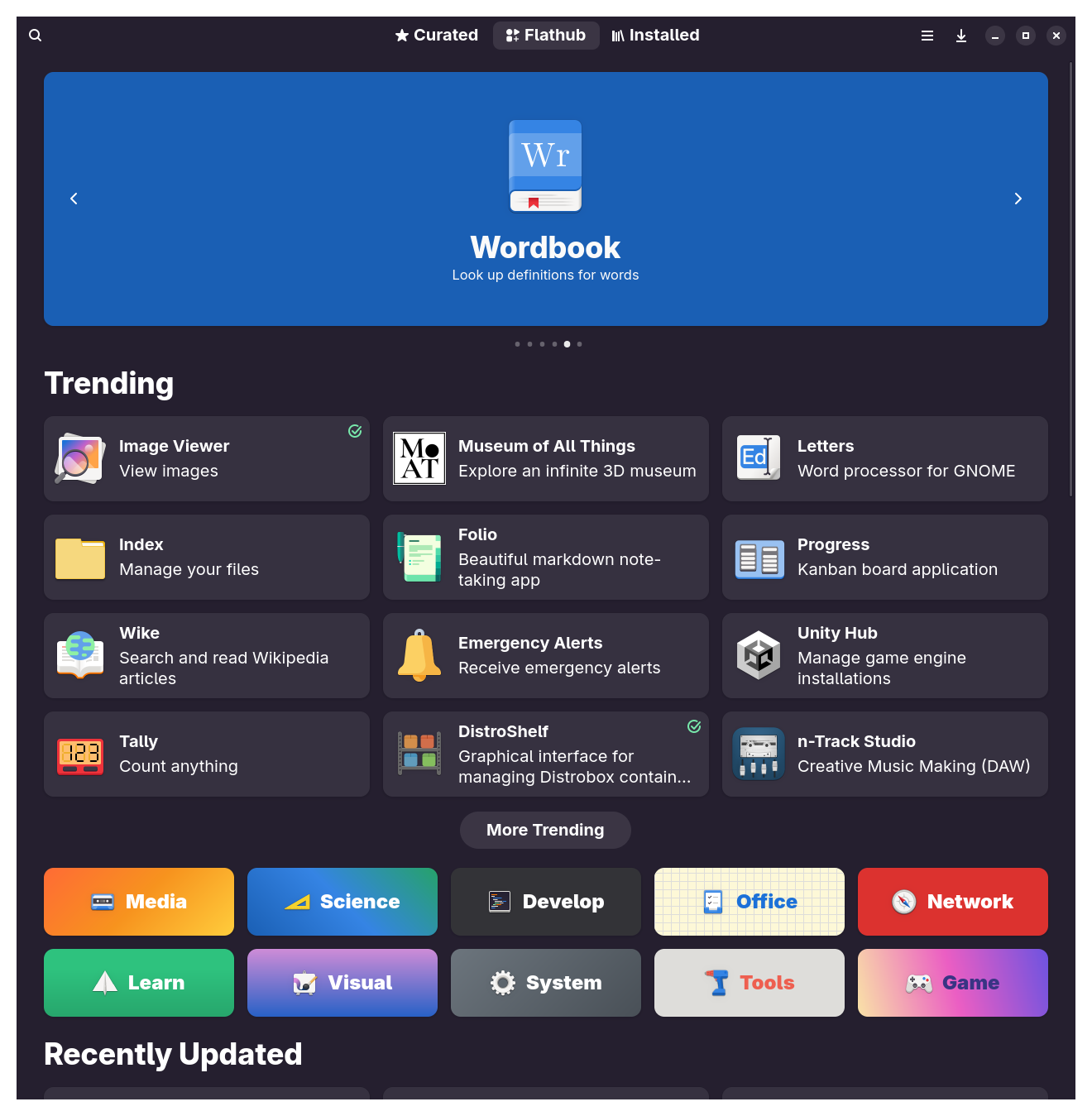
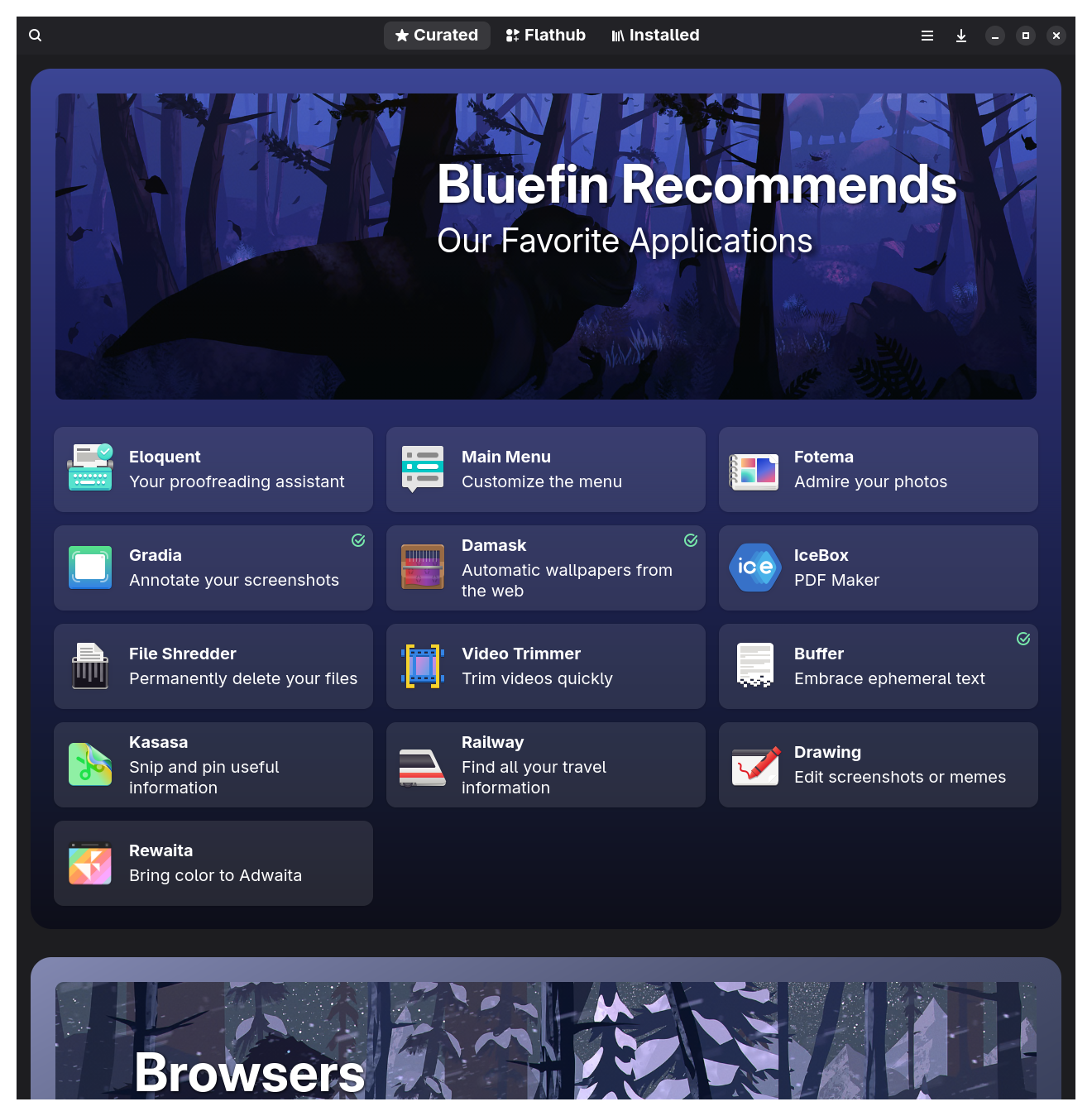
Bazaar makes its debut in Bluefin GTS! All Bluefins are now just using the Bazaar flatpak. You're in for a treat:
It's been super awesome seeing Bazaar move from a random project we found on r/gnome to what is effectively now the premier app store experience for FlatHub and Linux. You can help out tremendously by sponsoring the author.
This is also a major milestone for Bluefin since we've effectively done our part for the GNOME and FlatHub ecosystems and can now consider application installation a solved problem, we can introduce new things into Bluefin as a flatpak to begin with and move us away from distribution specific formats.
I am finding more applications now than I ever have. It's also a milestone for all Linuxes since flatpak's upcoming release gives us the flexibility to do this in a proper way with full lifecycle management. We can now be more flexible with the applications we can ship mid-cycle by plopping a file in /etc/preinstall.d. Those of you making custom images will really take advantage of this!
Shoutout to Sebastian Wick for this work in Flatpak and working on the next release of this cool tech!
What makes us different?
We're committed to a future where authors deliver their applications how they see fit. This should be decoupled from the operating system.
Speaking of packages, we've been doing more work engaging with Homebrew developers, check out this interview I did with Workbrew talking about our hopes and dreams:
Let us know if you're interested in working on Homebrew for Linux, we have opened a homebrew tap so that we can interate on bringing cool new things to you. A huge shoutout goes to Yulian Kuncheff and Ahmed Adan for spearheading this effort, please consider donating!
The fonts have been a disaster for a long time, we're finally ripping the bandaid off and removing a bunch of fonts from the image. For you command line nerds you can install any of the fonts listed in Homebrew or use a tool like Embellish to install more fonts.
If you're in developer mode you can bring the monospace fonts back with ujust bluefin-fonts.
We've dropped the GNOME Quick Settings extension for tailscale in favor of the upstream system tray implementation. For more information, check the docs, this requires manual set up.
The tailscale experience is still not where it needs to be, but now that Tailscale has started work on an official system tray implementation we expect this to solidify over the next few upstream releases.
Extinction is a natural part of life. After a deprecation cycle the following images are now removed:
Nvidia Closed Images: Due to Nvidia's software support changes we can no longer support the older closed modules for Nvidia cards. Not many people are using these, either migrate to the nvidia-open images or move to a stock image to use the built in kernel drivers.
Bluefin HWE Images: Not many people were using these, they have also been removed.
As usual most of the changes we do in GitHub to deliver Bluefin and not so much in the image itself. Major parts of the Bluefin repository have been cleaned up to align with the improvements and lessons learned from building Bluefin LTS earlier in the year. This has been the bulk of the work in the past few weeks.
Bluefin has significantly been simplified, now would be a great time to contribute as we've brought the repository up to the state of more modern bootc projects like Bluefin LTS.
bluefin:gts and bluefin:stable will be publishing on Tuesdays from now on instead of Saturdays. Publishing on Saturday nights is an artifact of pre-automation "reserved time" for testing before a weekly release. This matches the same release schedule as Bluefin LTS.
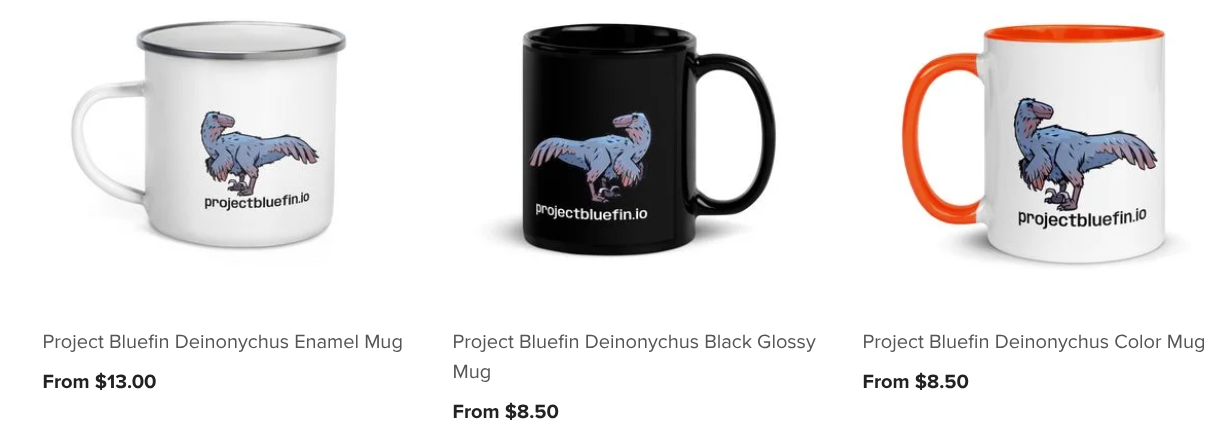
Bluefin is a deinonychus, and may snap at you occasionally. Four year olds can get feisty of so there might be issues that you discover that we haven't seen before. Filing issues is always appreciated.
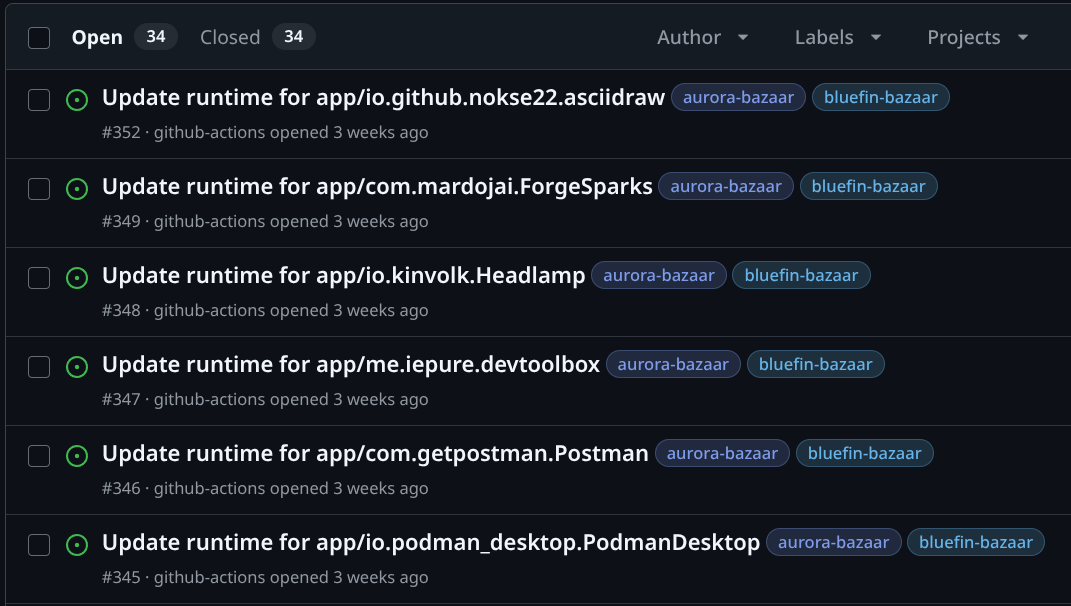
Sometimes starting in open source can be a real barrier if you don't know where to start. Don't have the skills to do cloud native things yet? Here's a good way to help out FlatHub. Flatpaks rely on what we call "runtimes" to ensure that the application has the dependencies it needs to run. Do a flatpak list to check them out:
This is important work because we want applications to be updated to the latest runtimes for security reasons. As it turns out, many of these applications have OPEN PULL REQUESTS already with people updating the runtime, you just need to find the app, run the updated version by following the instructions, and then report back to the Flatpak maintainer that the new app is working great (or broken!). Since GNOME 49 just released, there's plenty to do, so feel free to dive in and get started! Also remember, this work helps all of FlatHub, we're explictly sending new volunteers to help upstream.
FlatHub is critical to the desktop
We choose to help move application development forward via FlatHub instead of fragmenting the ecosystem with distribution-specific packaging. This includes shipping a premier FlatHub experience out of the box. You do not have to worry about misconfigured and low-quality Fedora flatpak remotes and packages on Bluefin systems.
Find your favorite app and see if there's a test build available for a new runtime. And if you have the skills to port applications to new runtimes, now is the time to flex. 😄
Nothing makes ops people happier than uneventful things.
Today is really like any other, we just updated a few tags, you always have the option to go to any version we support at any time. Wether you like the chill vibe of bluefin:gts or the refined aggresiveness of bluefin:stable , the raptor abides.
Here's the current lay of the land:
gts (default)
stable or stable-daily
latest
Fedora Version:
42
43
43
GNOME Version:
48
49
49
Target User:
Most users
Enthusiasts
Advanced users and testers
System Updates:
Weekly
Weekly or Daily
Daily
Application Updates:
Twice a Day
Twice a Day
Twice a Day
Kernel:
Gated
Gated
Ungated
NOTE: The stable and stable-daily branches will move to F43 in two weeks.
Bluefin is an active predator and is constantly hungry. You can help keep Bluefin healthy by becoming a contributor! We are an open source project and accept contributions:
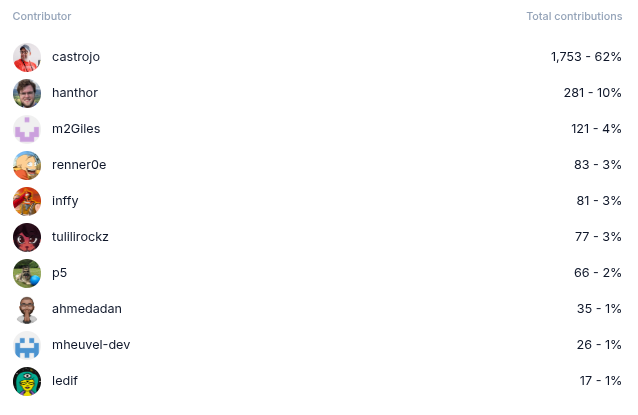
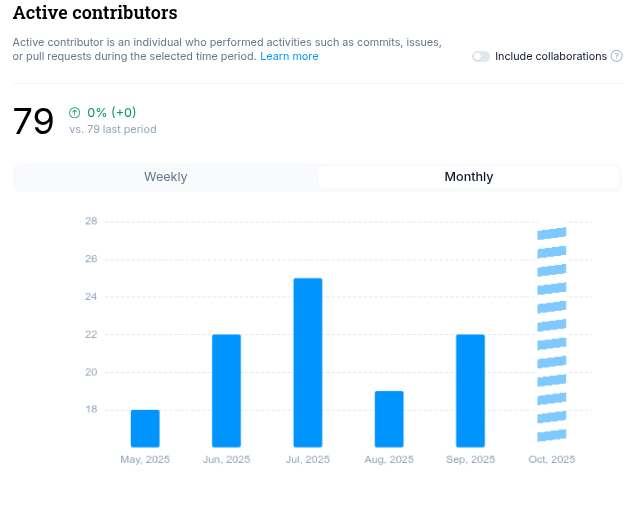
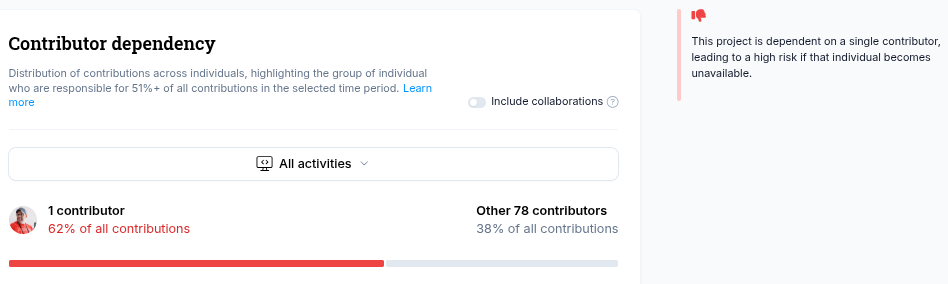
Let's take a look at our contributor health, and celebrate the amazing folks who have come together to bring you Bluefin! We use LFX Insights to measure our project health. First note that my results here are skewed, since I am either usually just merging or telling a bot it's ok to do something. This also does not include the rest of Universal Blue. Yes, Aurora people basically maintain both, haha.
This next one surprised me, I was expecting 20 or 30ish at best. Nice work ya'll!
Haha yep, I can't hide from the data though, free me from this!
Feel free to browse around and learn cool things about Bluefin's creators.
After KubeCon we head into the holidays, where things will slow down significantly. We've been in the lab with mad doctor Timothée Ravier and have been cooking up something. We expect that this will change the course of Bluefin for the better, forever. We can't wait to show you, until then, enjoy!
I was thrilled at the opportunity to team up with Pragyan Poudal from Red Hat to showcase Bootc along with Bluefin's vision for desktop Linux to a packed house at IndiaFOSS 2025 in Bangalore this past weekend. I managed to make only a handful of Linux users mad. It was a great chance to spread the word about image-based bliss.