Jorge O. Castro
Director of Dinosaurs
View all authors

Dakota Alpha 6

· 8 min read
Jorge O. Castro
Director of Dinosaurs

Dakota Alpha 6 is out. This one is brought to you by Ahmed Ahdan/ Built against GNOME 51 and freedesktop-sdk 26.08.1, running Linux 7.2.6, NVIDIA 615.71.09. Kernel OGC 7.2.6-ogc1 for your gaming needs.

This one certainly feels good! Please remember that we still do NOT support secure boot, so temper your expectations! Here's the changelog, I'll make a video on this one since we have a lot to discuss!

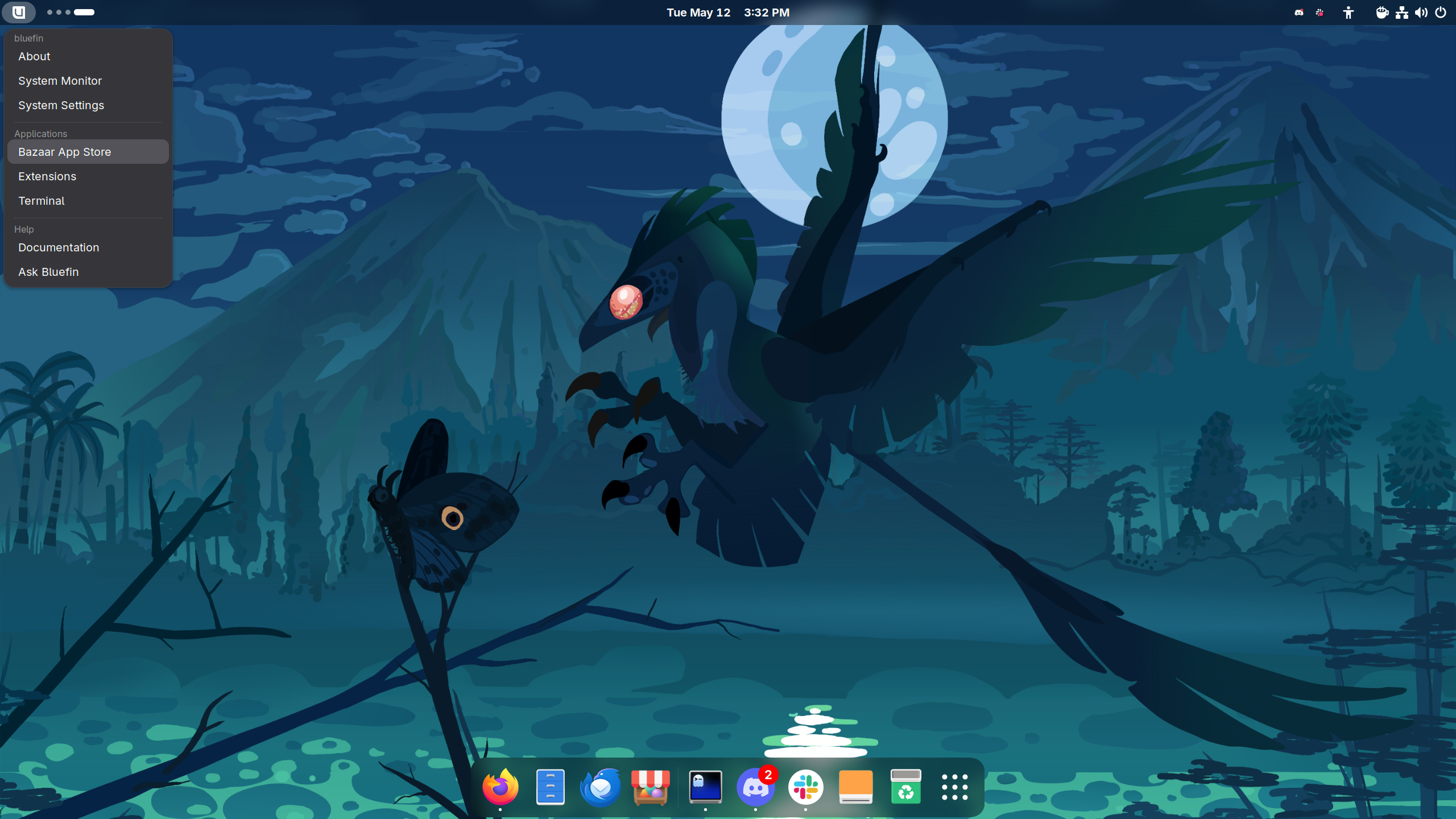
Bluefin Dakota desktop running GNOME
Dakota, built from source with BuildStream

Version matrix

Alpha 5 baseline values are from tag stable-20260731 (as reflected in the Alpha 5 release announcement):

ComponentAlpha 5Alpha 6Source / Pin
GNOME Shell50.351.0gnome-build-meta
Mutter50.351.0gnome-build-meta
freedesktop-sdk25.08.1426.08.1elements/freedesktop-sdk.bst
gnome-build-meta50.3-5-g4b2504651.0-3-ge34f1ebelements/gnome-build-meta.bst
Kernel7.0.117.2.6elements/core/linux-fdsdk.bst
Game Mode kernel7.1.4-ogc17.2.6-ogc1elements/core/linux-ogc.bst
NVIDIA610.43.02615.71.09elements/bluefin-nvidia/nvidia-drivers.bst
bootc1.16.61.16.13elements/gnomeos-deps/bootc.bst
systemd260.2261.2gnome-build-meta
Mesa26.1.426.2.2freedesktop-sdk
GTK4.22.44.24.0gnome-build-meta
PipeWire1.6.11.6.8gnome-build-meta
WirePlumber0.5.150.5.17freedesktop-sdk
NetworkManager1.56.11.58.1gnome-build-meta
xdg-desktop-portal1.22.11.22.1gnome-build-meta

Note on kernel and bootc: Dakota pins its kernel at 7.2.6 via elements/core/linux-fdsdk.bst (ahead of freedesktop-sdk 26.08.1's default of 7.2.2) and pins bootc at 1.16.13 via elements/gnomeos-deps/bootc.bst (ahead of gnome-build-meta's default of 1.16.6).

GNOME 51 "A Coruña" was officially released on September 16, 2026 — see the official release notes.

Migrating Major GNOME Versions

This is the first time we utilized dakota:next tracking a dev release, and Ahmed smoothly transitioned the testing branches through these:

ChangeCommit
GNOME 51 and freedesktop-sdk 26.08 on testing5005f85
freedesktop-sdk 26.08.1 and NVIDIA 615.71.09e835b88
Complete fdsdk 26.08 port across all variantsa29d9f6
Derive fdsdk pin and patches from tracked gnome-build-meta57a70d3
Stage sandbox shell explicitly for fdsdk 26.08526affd
Core junctions to GBM 50.4 and fdsdk 25.08.165e630bc
Core junctions to GBM 51.0-312334d2
Track gnome-build-meta master in :next3af437b

Kernel and hardware

Here's a bunch of enablement crap:

ChangeCommit
Kernel 7.2 with hardware enablement5fbeae7
Align testing on 7.1.86e388f8
OGC gaming kernel 7.2.6-ogc11371bce
Carry hid-asus build fix for OGC 7.2.6-ogc1d2c8cf7
NVIDIA 610.57.04 plus missing data filesed2bea8
ATH12K Wi-Fi across variantsb307333
Restore desktop capabilities across streamsa984a81
Preserve hybrid graphics configuration997f6ec
brlaser CUPS driver846cd92
dmidecode for BIOS info0c5c9ea
Disable zram in favor of zswap53952c7
ydotool input automation and uinput rulesa182aba
plugdev and nintendo_switch groups for udev02bb985

Desktop

And some of the upcoming desktop improvements that we've been going over in the Discussions:

ChangeCommit
Curated GNOME Shell extensions suite01b757b
quick-settings-audio-panel enabled by default8897f7c
BudsLink-Companion replaces Bluetooth-Battery-Meterb07c05d
syncthing-togglebluefin-bling v2bd7bbe6
Ghostty resize overlay off by default (Wayland loop)556bc0c
Ghostty dual-theme tracks GNOME Dark/Lightffe6271
Stop GDM fingerprint retry loop on unenrolled readersddc37d7
Disable PC-speaker WirePlumber sinka5e9152
Portable unzip flags for extension installs787bf4d
Preserve release ZIP root files in extension packaging20113c3
Avoid broken and intrusive desktop defaults691a377
Developer mode adapted to Dakota9efe6e9
Bluefin dinosaur avatars in GNOME user-account pickere106345
Unbreak fresh-ISO post-install (uwelcome, brew, devmode)85a1123

Game Mode

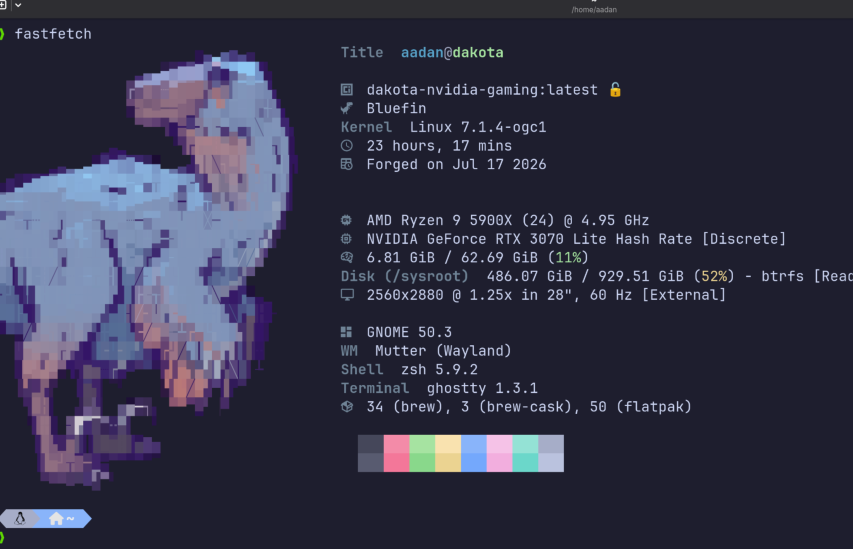
Fastfetch output showing the Dakota NVIDIA gaming image and the OGC gaming kernel
dakota-nvidia-gaming on the OGC kernel

Bluefin's "Game Mode" is fleshed out now, offering access to a "Bazzite Light" gaming setup, perfect for slaying out. Destiny on Linux please Sony!

ChangeCommit
OGC gaming kernel 7.2.6-ogc11371bce
32-bit GL/Vulkan drivers, Steam UI GPU acceleration096b351
Steam .deb pinned to versioned pool URLe051009
patches/linux-ogc added to sync overlayefc23c7
Re-pin LuaJIT after upstream deleted ROLLING tagf277abd

Image and boot plumbing

The chunka work is great, you'll notice way smaller updates than the old images. Top of the line hunter!

ChangeCommit
Single source of truth for the image-variant seta987f87
Real stream tag in fastfetch via boot-time booted-image syncd4048c6
Generate ownership during image builds with chunkah4360e70
Fetch remote companion data before reading in chunkah73ff57e
Preserve export mtimes in chunkah1c081c0
Compose host toolchain once during image buildse4a2dfd
Stop using /dev/stdin for inline writes under BuildBarn/BuildBox5e30bde

Behavior changes

  • Ghostty ships resize-overlay = never; theme tracks the GNOME Dark/Light preference.
  • snd_pcsp sink disabled in WirePlumber — audio no longer falls back to the PC speaker after resume.
  • zram is disabled; swap is zswap backed by /var/swap/swapfile.
  • Bluetooth-Battery-Meter is replaced by BudsLink-Companion plus the io.github.maniacx.BudsLink Flatpak.
  • aarch64 images are not published this cycle. (We'll turn these on soon)

Images

ImageStreamCommand
DakotaStablesudo bootc switch ghcr.io/projectbluefin/dakota:stable
DakotaTestingsudo bootc switch ghcr.io/projectbluefin/dakota:testing
NVIDIAStablesudo bootc switch ghcr.io/projectbluefin/dakota-nvidia:stable
NVIDIATestingsudo bootc switch ghcr.io/projectbluefin/dakota-nvidia:testing
GamingStablesudo bootc switch ghcr.io/projectbluefin/dakota-gaming:stable
GamingTestingsudo bootc switch ghcr.io/projectbluefin/dakota-gaming:testing
NVIDIA GamingStablesudo bootc switch ghcr.io/projectbluefin/dakota-nvidia-gaming:stable
NVIDIA GamingTestingsudo bootc switch ghcr.io/projectbluefin/dakota-nvidia-gaming:testing

You can't rebase to Dakota from another image. If you're not on Dakota already, reinstall from the ISO.

ISO downloads

Testing instructions and bug reporting: ISO Testing. File ISO bugs in projectbluefin/dakota-iso.

Lore

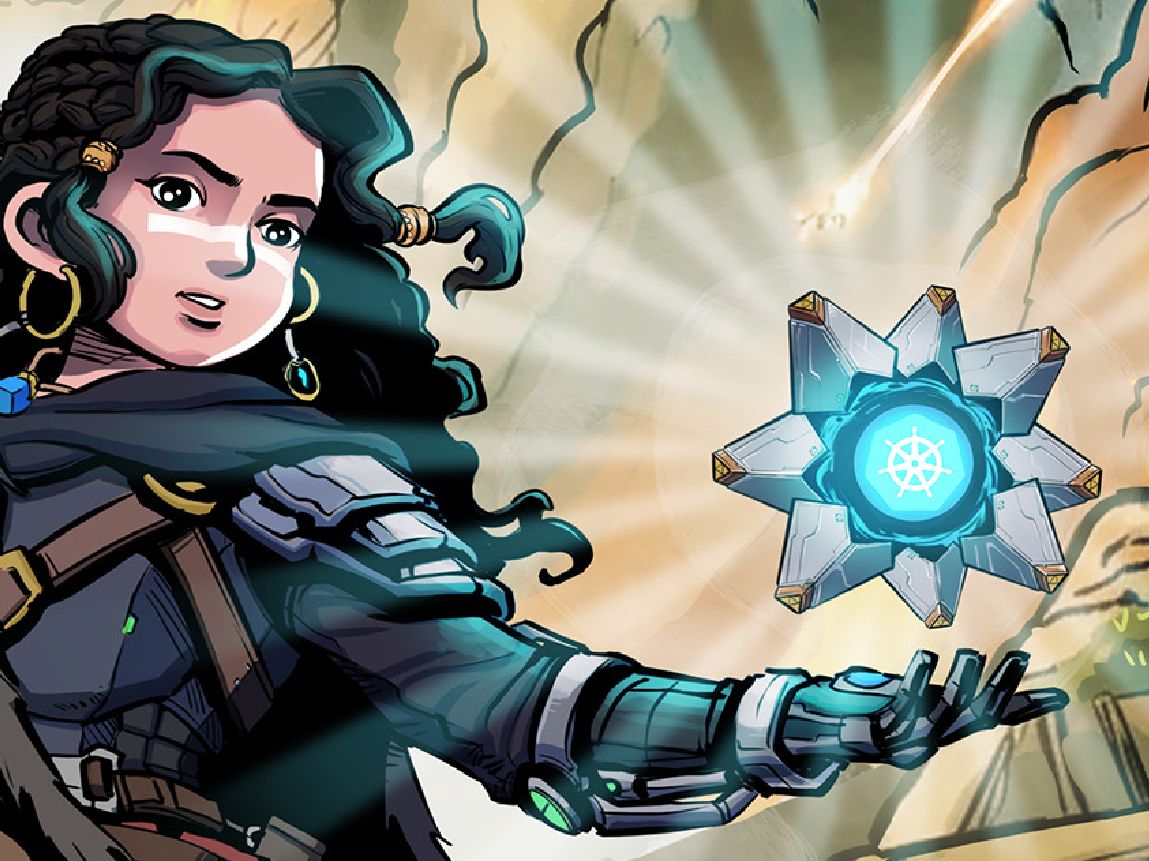
Remember that the wolves are coming, level up your skills at training.projectbluefin.io. It's a tough world out there, here's a sneak peek at the artwork from the artists at makemeacomic.com! These are just a sample of entries from a mysterious journal uncovered on Europa by a [REDACTED] merchant. Inside are the secrets to unlocking the potential of Contributor-Guardians and their mounts. But the forces of the Toilmaster are already ahead of them. Instructions from a doomed CNCF Expedition are sparse:

CNCF VANGUARD // ALERT ONE

There's a stone here. "All these worlds are yours, except Europa, attempt no landing there." But sir didn't the Hummingbird team leave three days ago?

1 / 4

Bluefin

Long-Range Raptor Mount

Bluefin Long-Range Raptor Mount
Bluefin — Long-Range Raptor Mount concept illustration

Announcing mcp.projectbluefin.io

· 2 min read
Jorge O. Castro
Director of Dinosaurs

Model Context Protocol (MCP) is an open protocol for LLMs and agents to talk to each other. We're now serving the Project Bluefin organization knowledge base and live factory state at https://mcp.projectbluefin.io/mcp.

Right now hive.projectbluefin.io exposes an API that has things that are useful for agents. We use it to dole out work to volunteers and to get review tasks. This is what's letting us scale out in ways we haven't been able to before. Hive has a nice Knowledge Base that it exposes, so this initial cut is to search that knowledge. This is mostly useful to connect whatever agent you use to our stuff and get context for your agent. So if you want to do Bluefin things you just add this. I've updated the Agentic Contributor Guide, note that our hive API endpoints are published, so if you're building a deep integration it probably makes sense to work with the Hive API directly. Feedback and usage notes welcome!

Endpoint Details

  • URL: https://mcp.projectbluefin.io/mcp
  • Transport: Streamable HTTP / Server-Sent Events (SSE)
  • Authentication: None (public, read-only)
  • Health Check: https://mcp.projectbluefin.io/health

Available Tools

Here's what's exposed:

ToolDescriptionParameters
search_knowledgeSearch Project Bluefin knowledge base: engineering patterns, test coverage gaps, CI conventions, and repo findings across projectbluefin/*.query (string, required)
limit (integer 1–25, default 10)
get_factory_statusLive factory status from Hive: hub health, active contributors, actionable items, per-tier limits.None
get_work_queueLive work queue and triage state from Hive: issues ready to implement and triage grouping.limit (integer 1–25, default 10)
get_index_statusOperational health, record count, and timestamp of the published knowledge index.None
get_quickstartOnboarding checklists (first-pr, run-tests, factory-gates, branch-rules).topic (enum, required)
get_repository_mapHigh-level component map, entrypoints, and branch targets for bluefin, bluefin-lts, common, dakota, documentation.repo (enum, required)

Reaffirming our Commitment to Upstream Kernel Development

· One min read
Jorge O. Castro
Director of Dinosaurs

Earlier this month Ahmed Adan and the rest of the Dakota team worked to bring the Open Gaming Collective kernel as an option for Bluefin's new "Gaming Mode". These kernels are explicitly designed to ship greg k-h's kernel and only ship patches that have a path upstream.

Here's some context:

Bluefin Gaming Mode and Dakota Alpha 5

· 4 min read
Jorge O. Castro
Director of Dinosaurs

Guardians ... a new Dakota arrives, likely our last before beta. @ahmedadan brings us an example of the power we can wield with BuildStream and The Final Shape. (Ask him about his COSMIC image!)

The builder is back in business and we now have enough institutional knowledge to make getting a new one and swapping it in easier. Improvements in the tooling in general has helped. And my homelab is doing from-source builds in 8 minutes, that's 4 minutes faster than assembling RPMs. We intend to make it trivial for anyone to deploy these on any modern infra. Buildstream and Kubernetes is a beautiful thing.

The world has changed! Here's the good stuff.

What it comes with

First let's get the versioning out of the way. Since we're based on freedesktop-sdk project we'll use their version. In this case, 25.08.11. The 11th release of the August 2025 major update. 26.08 is our next update. Yes, that's next month. :) Bluefin will remain versionless and tested as a whole, you'll just switch aggressiveness with game mode if you want:

  • Kernel: 7.0.11
  • Game Mode Kernel: 7.1.4-ogc1
  • GNOME Shell: 50.3
  • freedesktop-sdk: 25.08.11
  • bootc: 1.16.6
  • systemd: 260.2
  • Flatpak: 1.18.0
  • :testing GNOME 50 development builds
  • :stable Publishing daily if tests pass, moving to every other day for beta, weekly for GA
  • :next GNOME 51 rolling builds, currently busted.

We're helping out GNOME OS by shipping a new zswap configuration, based on their inprogress work upstream. Dakota uses zswap backed by a disk swapfile, rather than zram.

  • zswap.enabled=1 keeps recently swapped pages compressed in RAM, avoiding disk I/O when they are needed again.
  • zswap.compressor=zstd selects Zstandard: generally a good compression-ratio/CPU-speed balance.
  • zswap.max_pool_percent=20 caps the compressed RAM pool at 20% of installed memory.
  • zswap.shrinker_enabled=1 lets the kernel reclaim zswap memory under pressure by writing colder compressed pages to the backing swapfile.
  • vm.swappiness=100 makes the kernel treat reclaiming anonymous memory to swap as comparable in cost to reclaiming file cache. Since zswap absorbs the initial swap writes in RAM, this aims to preserve filesystem cache without immediately incurring disk latency.

The backing store is /var/swap/swapfile, created on demand at min(RAM / 2, 8 GiB) when the disk is large enough. Dakota explicitly disables GNOME OS's zram device, so it does not stack zram and zswap; The kernel arguments live in /usr/lib/bootc/kargs.d/20-zswap.toml, so bootc applies them on image switches and upgrades.

Feel free to give feedback on the swap stuff, it's an exciting area where we can hope to help out GNOME!

Open Gaming Collective

As part of our mission to improve the Linux desktop we're offering a "Game Mode" to Bluefin, which will pull in a bunch of stuff. It will be available in a checkbox in the control panel and is basically a lightweight Bazzite-lite built with BuildStream.

Yes, an OGC gaming kernel with aggressive updates but at least upgrades will work, lol. It will slay, so it is also aliased to dakota:btw. For the discerning raptor rider.

  • The kernel includes gaming-focused patches/features, including sched_ext and ntsync
  • Steam and its 32-bit compatibility libraries and controller udev rules, etc all built in - this is basically the Steam flatpak, you'll show up as "Freedesktop" in the Steam Charts
  • Gamescope and the Steam Big Picture gamescope session
  • GameMode, MangoHud, and vkBasalt for performance management, metrics, and post-processing.
  • InputPlumber, SDL controller database, and handheld/controller support. Note that we don't support handhelds but shrug it's all Linux.
  • All that extra Vulkan, SDL, audio, X11, USB, and input compatibility libraries for native games and stuff. Shout out to Kyle Gospo for the guidance!
  • First-boot Flathub installs for Lutris, Heroic, Bottles, ProtonPlus, Protontricks, and GOverlay.

And I'm sure I missed some.

How to Get It

There will be a GUI for this soon, in the meantime enjoy! You can't rebase to this from another image, if you're not on dakota already you need to reinstall.

ImageStreamCommand
GamingStablesudo bootc switch ghcr.io/projectbluefin/dakota-gaming:stable
GamingTestingsudo bootc switch ghcr.io/projectbluefin/dakota-gaming:testing
NVIDIA GamingStablesudo bootc switch ghcr.io/projectbluefin/dakota-nvidia-gaming:stable
NVIDIA GamingTestingsudo bootc switch ghcr.io/projectbluefin/dakota-nvidia-gaming:testing

ISO Downloads

Bluefin's Sausage Factory

· 11 min read
Jorge O. Castro
Director of Dinosaurs
RELEASE SOUNDTRACK TO HUNT BYThe Forbidden Factory

If you want to understand how a modern Linux distribution is made, you eventually have to look at the "sausage factory" - the intricate pipeline of code repositories, build systems, test suites, and orchestrators that turn raw source files into something you can boot on physical hardware.

Supakeen posted The Fedora 45 Sausage Factory, and the curtain was pulled back on Fedora's use of dist-git, Koji, Bodhi, Pungi, and openQA to make Fedora.

People are asking "what's the equivalent of this in Bluefin?" Most of this stuff sounds like a Pacific Rim sequel, so let's take a look. We are currently in the process of moving away from our own legacy sausage factory to Bluefin's final destination: Kubernetes.

  • projectbluefin/common: The shared "org brain" containing system configurations, desktop defaults, documentation, and foundational OCI layers. When most of you think "Bluefin", it's in here.
  • Image repos (bluefin, bluefin-lts, dakota): Derivative image definitions that consume common and layer specific desktop experiences or lifecycle variants.
  • Instead of spec files and tarballs, Bluefin's definitions rely on Containerfile directives and declarative package manifests. But in some cases you may still find a vestigial inline package install in a script.

Under the Hood: The OCI Toolchain

I've read comments on Reddit that think that all of this is GitHub-specific. GHA is there because we're lazy. At the end of the day, all of Bluefin is locally buildable on any service. And on any OS: you can build Bluefin on Macs and Windows too. Each repo has its own Justfile covering different tasks.

The entire point of cloud native is that you should be able to build the thing anywhere. If you get confused by "cloud native", try to remember "API Native" instead. Let's look at some standard OCI things:

[ git ] [ buildah ] [ podman ] [ skopeo & bootc ]
Declarative Config ---> Daemonless Layer ---> Local Execution ---> Registry Transport
& Tracking Composition & Inspection & Host OS Deployment
  • git: Tracks everything. This is the single source of truth. This is called declarative config and has all the config files.

Linux distributions talk about "rolling vs. stable" - this doesn't make sense in modern Linux. The entire thing is a git branch. It's what you choose to ship.

You need to ship the entire git branch. That means releases AND rolling tags, feature branches, testing branches, "test this crazy thing here temporarily branches", all of that. git is fully open source and not under the control of any single vendor. When the Bluefin factory is cooking things that used to take months now take hours:

Fastfetch terminal output showing the Dakota NVIDIA gaming image and OGC gaming kernel
OGC Gaming kernel and stack on Bluefin Dakota
  • buildah (Daemonless Builder): Assembles container layers statelessly without requiring a background daemon or root privileges on host runners. buildah is a CNCF Sandbox project and not under the control of any single vendor.

  • podman (Local Validation): Enables local parity. Developers can run podman run locally to inspect built layers before pushing code. podman is a CNCF Sandbox project and not under the control of any single vendor.

  • skopeo (Transport & Tags): Handles low-level OCI manifest operations - copying images directly between registries, inspecting layers, and managing release tags. skopeo is a CNCF Sandbox project and not under the control of any single vendor.

  • bootc (Target Deployment): Bridges standard OCI container images directly to the target machine's disk. It handles kernel handoff, transactional filesystem updates, and automatic rollbacks. You're not going to believe it ... bootc is a CNCF Sandbox project and not under the control of any single vendor.

Practical Walkthrough: Adding an Application

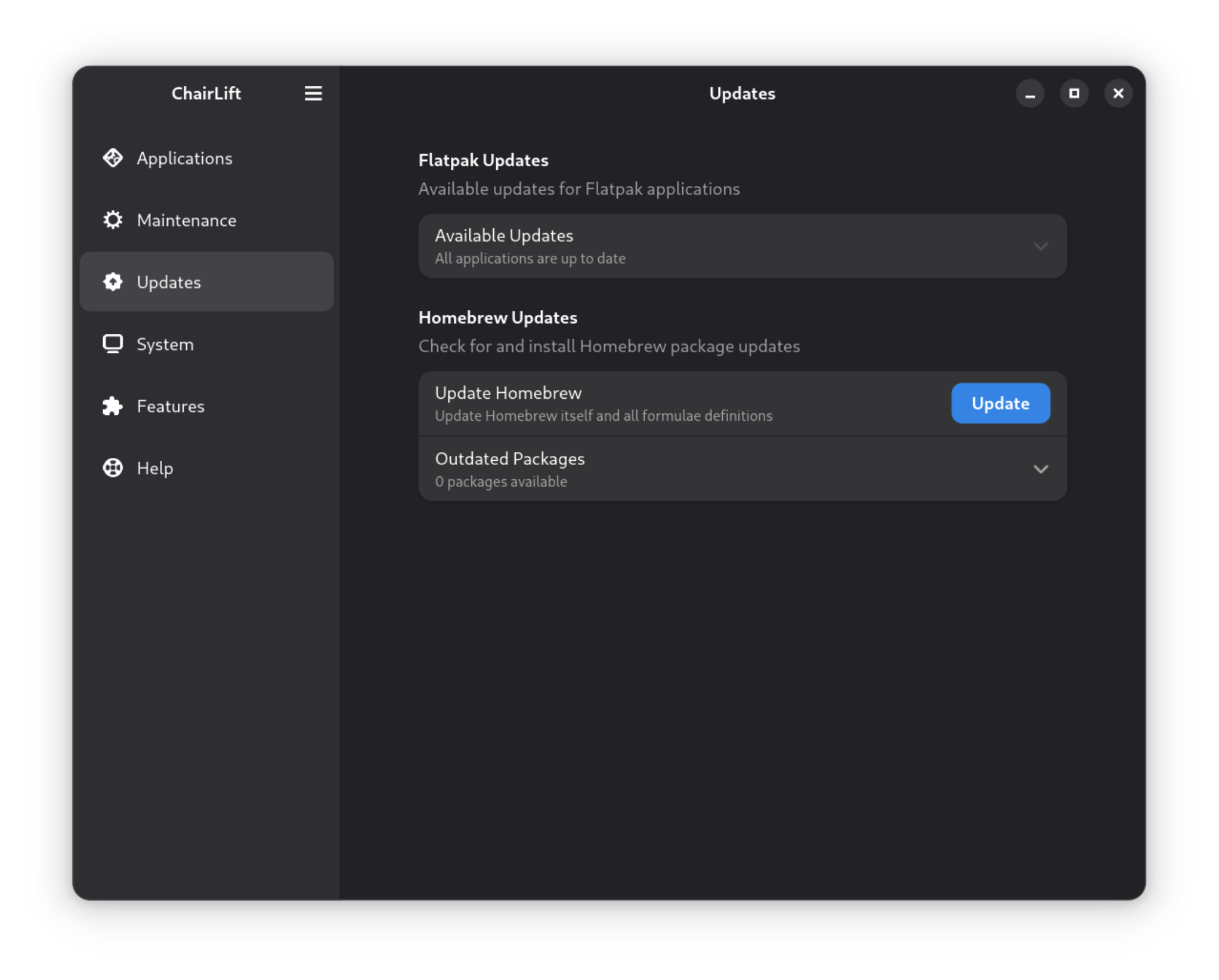
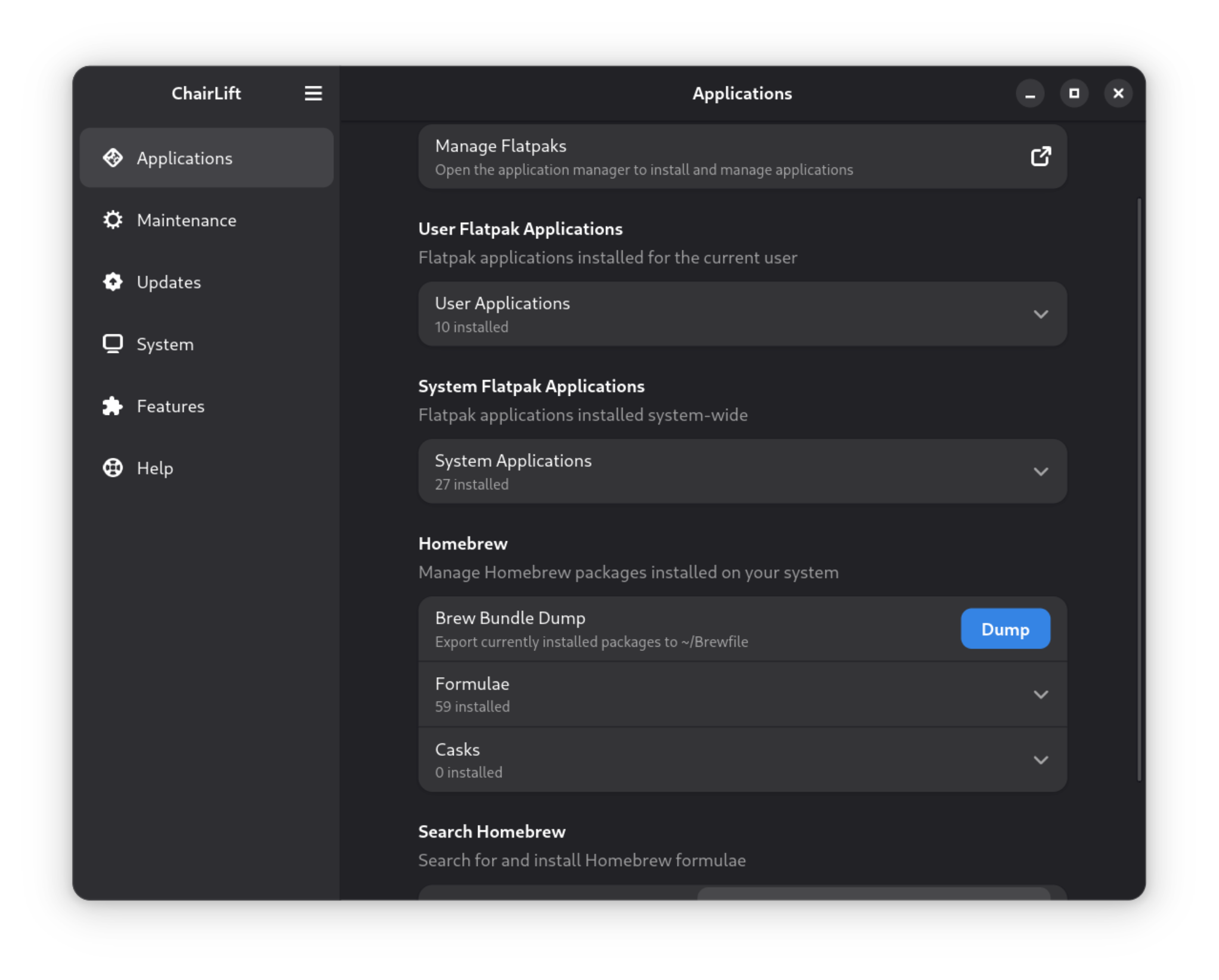
Let's add a new application. Let's say the control panel we've all been missing. Brian Ketelsen, Father of Bluefin and now control panel connoisseur has blessed us with this:

ChairLift applications screen showing Flatpak and Homebrew management
ChairLift’s Applications view.
ChairLift maintenance screen showing Homebrew and Flatpak cleanup tools
ChairLift’s Maintenance view.
ChairLift updates screen showing Flatpak and Homebrew updates
ChairLift’s Updates view.

He's been rolling with this in his custom image. And if you're like me you probably want that thing right now. Here's the Git repo. Not distribution specific either, Brian's images are based on Debian. See how weird it is to classify things the old way? Who cares. It doesn't even ship on the image it ships in homebrew lol.

In Bluefin, adding an application comes down to choosing where the change belongs in the repository tree:

Option A: At the Shared Level (projectbluefin/common)

This is 95% of it. Someone saw a new app in Flathub and wants to feature it, or we need to swap out a component when an app gets deprecated, etc. Chairlift will go here.

  • Contributor: edit a central Brewfile (for Homebrew CLI utilities or Flatpak desktop apps).

Option B: At the Image Level (bluefin, bluefin-lts, dakota)

  • Contributor: edit an image-specific build script (e.g., build/10-build.sh executing dnf5 install -y <package>) or a bst definition file.

This is usually system-level stuff, or may be things the user doesn't see that we deal with. For example, NVIDIA drivers on all three are installed differently. Or if your hardware acceleration breaks, etc. Anything that touches the metal, like that OGC kernel.

Change Processes

We have a lazy consensus model - in the early days of Universal Blue we had full-blown specs and it looked similar to what you see in Fedora today. These days you can file a bug in common and if maintainers have consensus, we do it.

This can cause friction for new users who do not understand Bluefin's mission. An open process doesn't mean a free-for-all. It also means we force work OUT of the org. For example, in Dakota we'll be prototyping zswap configs, but -

However, the entire process is in the air. Six months ago I would have told you, "if you didn't file a bug, I don't care; you didn't put in any effort, so I won't either." Now I can point an agent to my entire Discord and slurp out months of people's actual bugs and get actionable feedback.

This is why IMO the best thing we could invest will be ujust report. We make it easier for people to submit their technical data, opt-in. But that is a post for another day!

Two Eras of OS Engineering

Fedora's sausage factory is a masterclass in classical Linux release engineering. But we are a small project and cannot afford such complexity.

And then you would say, "But Bluefin is Fedora/CentOS, you can't make Bluefin without it." And you'd be right! And then the other half of the room would say, "Listen to the k8s guy talk about complexity!" And they would also be right!

The last bit is BuildStream, which effectively replaces just about everything in that Fedora diagram with a single, simple CLI tool. BuildStream is hosted at the Apache Foundation.

The Final Shape

Shove your Linux dreams in git

If you're a developer, the entirety of your existence lives in git.

  • Anything you want, any version you want, we're going with GNOME OS versions first
  • But then add things like OGC kernels, nicer Mesa, etc. We're finishing up the Dakota gaming image now and there will be a nice GUI to make all of your lives happier.

This is GitOps, so forking, etc. is encouraged. Pretend you can get a Bluefin for every possible iteration (because you can!) Some of you will think this is about images, but most of you will do the smart thing and swap out Brewfiles and "top 10 kickass Flatpaks" and so on. Both of these ecosystems are distribution-agnostic.

A vendor-neutral, well-maintained toolchain makes your dream real

You know when I say "distroless", "cloud native", "the Kubernetes moment", and all of that stuff? And then people laugh? This is what I mean. Moving away entirely from the concept of distribution tooling to commodity tools.

It's down to git, bst, and bootc. BuildStream can output your dream in one go. THE ENTIRE MIDDLE PART GOES AWAY. No intermediary format - it goes right to a format that we can run tests on, scan, etc. You don't need "distro builders"; you just need normal containers!

I could give a sysadmin these three tools and a laptop with the right creds and publish Bluefin, and none of you would notice.

The DevOps Part

So on the one hand, we have The Final Shape. It's clear what I think: we optimize for correctness in Linux first, your shitty VPN RPM be damned.

What Fedora Hummingbird brings to the table is to take all of that operational knowledge Fedora has, and then bring THAT into the container-native space. They are, after all, building a Linux distribution.

Which is also why we say we're not a Linux distribution. Dakotaraptor was born into cloud native. It will never have to deal with COPRs or akmods or any of that stuff. It will just have what it needs with a handful of tools and infrastructure.

I would argue our appeal is that we start from the success of Kubernetes. I have now experienced BuildStream with Buildbarn and Kubernetes.

  • From a technical perspective, it excels at everything we need it for and I have yet to see anything even in the same ballpark.
  • From a cost perspective, it's unbeatable. Every infrastructure provider in the world sells K8s, and everyone's laptop has podman.
  • Contributors

That last one. Millions and millions of developers know this tooling already. This is a great opportunity to meld the distribution processes with new people coming in at Hummingbird Factory level.

Our message to contributors remains the same. Use the tools everyone else is using - bias towards trusted vendor-neutral organizations. I have annoyingly pointed out which of these tools are hosted by the CNCF and the Apache Foundation. This is what "Cloud Native Linux" is.

This is not a dunk

I liken Fedora to last year's McLaren. When it comes to traditional Linux distros, you'd have a tough time beating Fedora. And just about everything you hate about it has nothing to do with the tech and probably the policies.

This is why Fedora Hummingbird's factory is appealing to me. As you can tell, I can't shut up about it.

But things change, and every year the users demand the spectacle. Fedora Hummingbird is a ton of well-funded enterprise tech - they've got wind tunnels, an awesome factory, engineers fighting to be the best. Inserting all of that Fedora operational DevOps knowledge into a modern Hummingbird design would slay.

Fedora Hummingbird is built with this same collection of CNCF and Apache projects. Combined with other open source projects, many of which are controlled by a single vendor, but have years of enterprise pedigree with billions of dollars worth of ecosystem to show for it.

Loop closed ...

Mastery of these tools is in high demand. Even if you skip all of the operating system parts, all of these skills are useful for much more. The desktop is but a sliver of places you'll find these tools.

Some will grab RPMs and debs, some will grab bst. All will need Kubernetes.

We should encourage this, all in the name of sport! Sharing about 95% of the tooling and the people. Let's not forget that Ubuntu's putting in some great laps!
Why Bluefin is all in on agentic development

· 2 min read
Jorge O. Castro
Director of Dinosaurs

Is AI good or bad for open source? This is 58 minutes of me explaining what I've learned on this.

If you're here for the hot take: Are we really all on the same side? There are two worlds in Linux. What reddit/masto/youtube thinks "Linux" is. And then how Linux actually is.

Our value to our users is that we give you Linux as designed by the professionals. The flex is leveraging the collective knowledge of the community. New users have been led to believe that shipping three-year-old kernels and old software is the right way to consume Linux. Good luck with that. When it comes to my Linux, we listen to Lennart. We do listen to GNOME developers. Linux is about choice. We choose a well-designed system and thank the UNIX gods every day that we don't have to deal with that stuff.

We choose not to let people dictate to us how to use our computers. The science is out. The experts have spoken. I've been fortunate to have access to Greg K-H during his time, and we spent a long time discussing how this affects our communities. And he's right. The damn things are finding bugs. And I'm tired of Linux's bullshit. And I mean that in a loving manner. 90% of this crap is passing a 0 or 1 to some silly argument because Asus hates you.

We've got new territory to explore and we're moving quickly. My lesson from six months of AI is "Seven Days to the Wolves". Where will we be when they come? I've been doing this job a long time and it took me fifty-eight minutes of Puerto Rican mansplaining and a cloud-native symphonic metal musical to explain it. LOL.

clankers

Five Years of Bluefin

· 15 min read
Jorge O. Castro
Director of Dinosaurs

First let's celebrate. It's five years of Bluefin and Universal Blue! Thanks for riding with us. Starting later this year you can join Bluefin, Rafael, and the rest of cloud native as Bluefin comes to your hands.

We're proud to announce Seven Days to the Wolves, a comic and musical series set in an alternate future where Maintainer-Guardians fight alongside users for survival. We hope to expand this into the world's first cloud-native musical to be performed live at KubeCon (We have goals!).

In the meantime, enjoy this multi-hour metal maelstrom of death and destruction. #stopjohnbazzite

BLUEFIN: SEVEN DAYS TO THE WOLVES

Will you be ready when they come?

Parts of the story will be dropping over the next few years and will star some of your favorite OSS heroes!

Bluefin Server showcase with the Seven Days to the Wolves player

The Great Migration

We're in the process to moving to the factory to build Bluefin. This process is opt in and will be a transparent to most of you. The TLDR is you'll see your image name change from gchr.io/ublue-os/bluefin to projectbluefin/bluefin.

It's midsummer so not a bunch of changes on the images. We'll work on this in 2H2026 so for now there's no need to worry, just chill and enjoy your Linux!

Bluefin

Bluefin

Let's start with Bluefin.

The new Bluefin is a tad smaller. We're dropping the dedicated DX images, everything we support is in brew now and is operating system agnostic. We aim to ship the most popular developer environments in cloud native and hope you give us feedback on things. ujust devmode is the CLI and remains unchanged.

Don't expect many changes here other than moving to sealed images at some point. projectbluefin/bluefin:next is in place if anyone wants to start working on that.

Anyone who is interested in driving forward with the Fedora base images is encouraged to work here. This is also the first time this Bluefin has an aarch64 version!

Bluefin LTS

Bluefin Achillobator

Bluefin LTS has also moved over to the factory. Bluefin GDX users have been moved here already. Nothing to report, though we turned off the ISO downloads to the old versions so people don't get confused. Once everything is set here we'll relaunch new ISOs.

Not much to say here, I'm mostly here for the fuzzy brown guy. Bluefin GDX has been retired as an image, the proper Nvidia tools are on the nvidia images themselves, and most of what was "GDX" is now in userspace with brew and containers, enjoy!

Dakota

Bluefin Dakosaurus

Dakota is our latest and most sophisticated raptor, featuring the cutting edge of Linux desktop development. It's built from GNOME OS using BuildStream.

Most of the work I've been involved with this cycle has been working on this. (And failing lol). Ahmed and Jordan just got the builds online and we'll probably do another alpha later this month. Things are really great here and I spent some time with the GNOME OS and systemd folks in Berlin this summer to ensure we're on the right track.

James and I worked on the ISOs this cycle, and we finally have one unified ISO that covers Nvidia/AMD/Intel on one ISO. Needless to say this is my raptor of choice and I'm hoping to play with more builds this weekend. Once the builders are up I'll start work on Bluefin's "game mode", offering the very best of OpenGamingCollective's tech.

Bluefin and The Forbidden Factory

The "factory" is a culmination of everything we've been building. I guess it'd be the equivalent of "Universal Blue 4.0". It's simultaneously the most important change in Bluefin's history, and the most invisible! Also spoiler alert it's the second comic!

It's a combination of the server OS, FSDK containers, Kubernetes, Argo, BuildStream with Buildbarn, and everything you need to build Bluefin "on the spot". Basically, instead of "the OS" consider the entire toolchain "the product". Unlike the old methods, this new factory is all about leveraging clankers and putting them to work effectively via hive.

Bluefin dinosaur group

The Factory is a result over about a year of convergence with many groups. We've assembled GNOME 50 desktop tests and have started work on KDE. We test everything in this thing. Each test runs through a full suite. Checks everything, network, apps, and other functionality. We can finally automatically test everything and then post a screenshot at the end of the test.

Fully automated testing

The screenshot you see on the Bluefin releases will be the real release on your computer. Every default app will be tested and will have evidence backing it up. If a e2e test doesn't pass, no Bluefin that day. Computer running weird? Run ujust report and submit the issue and a clanker will go figure that crap out. Life's too short.

And not just Bluefin. We're throwing everything at this thing. Aurora, Bazzite, Fedora Silverblue, Zirconium, GNOME OS. Every time there's a published image we run a battery of tests on it. We are not yet doing visual recognition - this is to catch visual regressions. Right now we're just hoping someone on a testing build is paying attention. It's encouraging to see members from bootc and the UAPI Group working in this space. The idea is to have a completely manageable, reproducible, and sovereign system to run everything, not just a few desktop images.

The Factory dashboard is one of the best ways to see whether an image is actually ready to ship. This is meant to expose more broken things before they reach you. Check out the Hummingbird public meeting this Thursday, where I hope to present on the components in more detail!

I'll also be doing a complete factory tour and explaining our experiences with agentic development. I look forward to moving faster here! I spent a good deal of time on the charts:

Factory snapshot · July 20, 2026 snapshot

The dashboard is live, so those numbers will move after this post ships. The Factory dashboard and its underlying data are the sources for this snapshot. We'll continue to add information here over time!

Freedesktop SDK Containers (Alpha)

Every factory needs purpose-built containers. Since the goal is a fully offline, self-contained build system, we built our own — carved from freedesktop-sdk components using the distroless playbook. 90% of "distroless" is deleting all the docs and not providing shells. We're able to do this quite easily with BuildStream

BuildStream is amazing

I was able to make a mostly functional OS in about 45m with BuildStream. Bluefin will continue to move in this direction since it's clearly got the community momentum we're looking for.

The current images range from a ~40 MB distroless base (glibc, coreutils, CA certs, tzdata) up through distroless Python, Buildah, and Skopeo variants. I also made an omnibus lab-runner with kubectl and a few other tools in one convenient package and a shell for ops work. Two prototypes are worth calling out:

Homebrew nspawn container — a Homebrew developer environment packaged as a systemd-nspawn machine image rather than an OCI image. The systemd folks think this approach is worth investigating, and this is the result of some beer drinking in Berlin. I haven't tried it yet but if you're one of those distrobox-adjacent folks it might be interesting for you.

All images are keyless-signed with Sigstore Cosign and include BuildStream-native SBOMs. Tags track the FSDK point release. The actions are easy to copy — fork and go, no key wrangling required. I am finding the base images to be quite good, and in general I find the fsdk containers to be a nice alternative to Chainguard and other distroless images. For us the benefits are simple, these are the same libraries as the operating system so it doesn't cost us much to make these.

Bluefin Server (Alpha)

Bluefin Server v25.08.13 targets the same space as Flatcar Container Linux, Fedora CoreOS, and Talos — but is built from scratch with BuildStream 2 from freedesktop-sdk components. This one was kind of an accident. I needed a server OS for the new homelab and there wasn't an easy way to get a newer kernel in Flatcar. Since we have BuildStream, making this was pretty straightforward. This is basically the Dakota setup without the desktop.

The OS payload is a compressed XFS DDI filesystem deployed by an offline, systemd-native installer. This is using systemd's new interactive installer. Burn it to disk and run through it and then you're done.

Key properties:

  • DDI image-based updates with atomic rollbacks via systemd-sysupdate
  • Minimal, distroless rootfs — going to shoot for no shell by default with a GUI but we'll see how far we get on that
  • k3s for kubernetes available as a systemd-sysext
  • GPG-verified SHA256SUMS, BuildStream-native SBOMs, keyless signing throughout, all that crap
  • Currently on the GNOME Desktop kernel but I am shopping around, since we're using UKIs swapping out kernels is easy

Alpha 1 is live. Beta comes after the 26.08 FSDK bump next month. KubeStellar dashboard integration is in progress but not ready yet.

Testsuite: Full Desktop and Image Coverage

Bluefin's automated test suite is the quality gate between an image build and promotion. It runs headless Wayland desktop sessions in QEMU on standard GitHub Actions runners and can be supplemented with any hardware.

What it covers

Here's what we've got working on so far. Shoutout to Christian Schaller at Red Hat for guidance:

  • smoke — core GNOME, Settings, MIME handlers, accessibility, desktop identity, Orca, input methods, keyboard layouts, XWayland, ScreenCast, screenshot portals, Online Accounts, and printing
  • common — portable SSH health checks for Flatpak, portals, polkit, shell behavior, immutability, and system health
  • vanilla-gnome — upstream GNOME OS baseline
  • developer — Homebrew and Ptyxis on developer variants
  • dx — VS Code, distrobox, JupyterLab, and mise
  • software — Bazaar app-store behavior and Flatpak CLI health
  • lifecycle — bootc upgrade, rollback, and migration
  • security — Cosign signature verification
  • hardware — udev rules and emulated peripherals
  • bazzite — Bazzite-specific extensions
  • flatcar — Flatcar OS boot and lifecycle

The smoke and common suites are designed to run against any GNOME bootc image so feel free to take it for a spin.

How it works

  • Behave runs the Gherkin scenarios and step bindings
  • qecore-headless bootstraps the Wayland and D-Bus session
  • Dogtail drives the accessibility tree through AT-SPI
  • gnome-ponytail-daemon provides coordinate injection for Wayland
  • GNOME Shell Eval handles the GNOME 50+ top-bar fallback
  • Shared SSH steps assert system state from outside the VM
  • Dynamic suite sharding distributes large smoke and common runs
  • Coverage counts and screenshots publish to the Live Build Health Dashboard

We'll continue to expand it as some tests are better than others.

Reusable integration

Image projects can call the reusable e2e.yml workflow or the gnome-e2e@v1 composite action with an OCI image, selected suites, a test ref, optional native-app skipping, Flatpak screenshot IDs, zstd:chunked coverage, VM memory, CPU count, and disk cleanup. The suite also provides reusable ISO validation for downstream projects. None of this has been tested outside of myself so if you're diving in get ready to get dirty!

Local development uses Python 3.14 with behave, qecore, and dogtail; full GUI runs require a live Wayland and AT-SPI session. The repository includes Argo and KubeVirt plumbing, a coverage dashboard, Codecov reporting, Flatpak caching, and the container images used by the test jobs. (The whole enchilada!)

Does this mean I'll get less bugs?

Yes and no. Most of these aren't blocking yet. A few of them catch issues you've reported in old-bluefin. Some of them give us capabilities we've never had, like mass upgrade testing.

If we had perfect Linux tests no one would ship because the entire desktop stack is a tyre fire lol. However with better, more automated testing we can get to where we need to be!

Suncatcher

Bonus wallpaper from Natalia and Delphic!

Suncatcher artwork from Seven Days to the Wolves

The Lab, Actions, and Finpilot

projectbluefin/lab is the "everyday" part of the lab. It contains everything I am running in the homelab to test Bluefin, etc. It runs image and ISO tests in KubeVirt, handles graphical checks on the lab hardware, and collects screenshots and results that can be attached to a build. That lets us validate the thing people actually install, not just the container build that produced it. These tests are additive and listed on the website.

We're adding these as gates, which means when a contributor merges something it will land in a testing branch. Then as part of the release processes all of these tests run. The lab repo is for people who want to add their homelabs to help with Bluefin. It's messy in there, but if you know K8s, help is always wanted!

The intent is for these to be driven by GitOps, which means no access control or people connecting to remote servers, your agent either opportunistically finds work or is assigned work from hive. Lab repo

projectbluefin/actions is the shared build layer behind the factory. Repositories can use the same workflows for bootc image builds, multi-architecture publishing, signing, SBOMs, and release metadata instead of each project inventing its own supply-chain plumbing. This is the sort of infrastructure that is invisible when it works, but it is what makes the rest of the factory repeatable. These actions are all new and heavily centralized, so if you want your custom image to use the latest tech, check out this repo.

finpilot is still there and now has a new maintainer! This hasn't been integrated into the factory but it's working pretty great. finpilot repository

Merch

The Bluefin store has a couple of especially good ways to rep Bluefin. All of the proceeds go towards artwork, and the kid's shirt is priced the lowest we could make it.

Bluefin Women's Rawr shirt

Bluefin Women's Rawr

Stabby stabby stabby - a relaxed-fit everyday tee with a little more raptor energy.

Shop the shirt - $16

What's next

Bluefin Utahraptor

The 26.08 FSDK release is next month and Dakota's looking to move to beta so there's plenty to do. In the meantime enjoy your day and rock out to some Wolves metal! Then we cycle into Fall.

As always thanks for joining us and keep on rocking! Feel free to ask questions, we covered a ton!